Introduction
- The French revolution is considered the most important landmark in human history.
- The revolution occurred in 1789 and swept away the existing political institutions, overthrew the French Monarchy, and aimed at establishing an egalitarian society and responsible government.
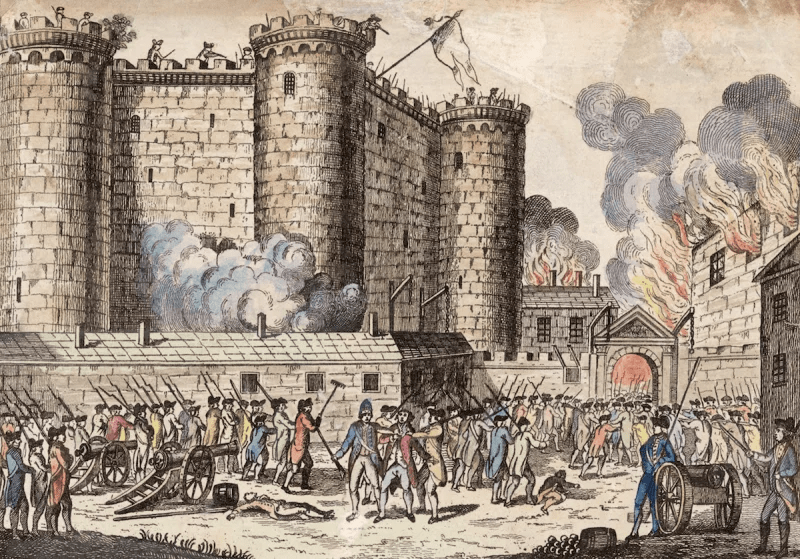 Illustration of Storming of the Bastille Prison
- The revolution began with the storm of Bastille on July 14, 1789, and continued until the rise of Napoleon Bonaparte to power.
French Society During The Late Eighteenth Century
- The term ‘Old Regime’ is usually used to describe the society and institutions of France before 1789.
- French society before 1789 was divided into three estates; it was called a society of estates or feudalism.
The estates constituted as follows:
(a) The First Estate consisted of the clergy.
The clergy were exempted from paying taxes to the king.
(b) The Second Estate consisted of nobility, was also exempted from taxes.
The nobles further enjoyed feudal privileges, which included feudal dues that they extracted from the peasants.
(c) The Third Estate consisted of big businessmen, merchants, court officials, lawyers, peasants and artisans, landless labour, servants, etc. The Third Estate comprised both rich and poor persons.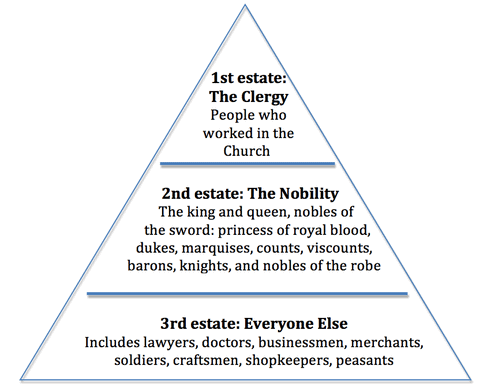
The Struggle to Survive
- An increase in population led to a rapid increase in food grains.
- Production of grains could not keep pace with the demand due to which the price of bread rose rapidly.
- Due to low wages paid to the labourers the gap between the poor and the rich widened. Things became worse whenever drought or hail reduced the harvest.
A Growing Middle Class Envisages an End to Privileges
- Peasants used to participate in revolts against taxes and food scarcity.
- The Group of the third estate had become prosperous and had access to education and new ideas.
- In the eighteenth century, new social groups emerged, termed the middle class, who earned their wealth through expanding overseas trade and by manufacturing woollen and silk textiles that were either exported or bought by the richer members of society.
- The third estate included professions such as lawyers or administrative officials.
- A person’s social position was dependent on their merit.
- All these groups were educated and believed that no group in society should be privileged by birth.
- Rather, a person’s social position must depend on his merit. A new form of government was proposed by Rousseau based on a social contract between people and their representatives.
- Similarly, Montesquieu proposed a division of power within the government between the legislative, the executive and the judiciary.
- In the USA, this model of government was put into force. Louis Louis XVI planned to impose further taxes to meet the expenses.
Causes of the French Revolution
1. Political Causes
- The political structure of the French state was highly unpopular with the people who were burdened with heavy taxes and insecure conditions of life and property.
- Divine rights of the kings, despotism, and tyranny of the French monarchs topped by the extravagance and inefficiency of the Bourbon Kings.
- Louis XV indulged in a life of ease and pleasure, was not interested in administrative reforms or the welfare of the people.
- Louis XVI though good-natured was completely under the influence of incompetent and corrupt ministers and a domineering queen of Austria, Marie Antoinette.
- Absence of any representative body to voice the need of the people. Local bodies called Parliament were courts of justice rather than voices of people.
2. Social Forces
- The unfair division of French society and its feudal nature was also responsible for the revolution.
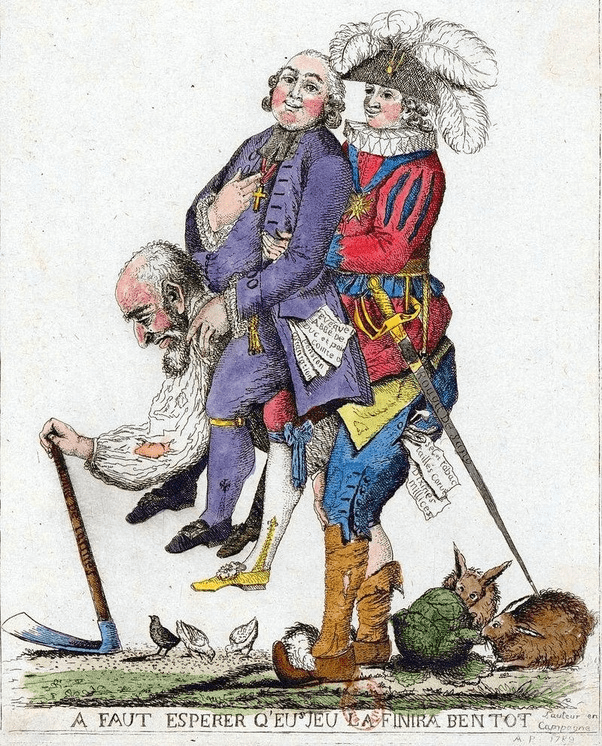
Clergymen and Nobles compressing Commoners
- The first two estates enjoyed all the privileges and benefits in society whereas the third estate was fraught with inequalities and discriminations. Most of the burden of taxation was borne by the least privileged and most impoverished third estate.
- The middle class was most receptive to new ideas and values as they were educated and has a broader outlook, denied the whole ideas, rights and privileged existence where the main qualification is that of birth and instead favoured the criteria of merit.
3. Economic Unrest
- In the 18th century the condition of the common man had become pathetic, the problem of subsistence due to failure of crops, increase in the prices of food grains.
- In the second half of the 18th century, the French economy had started expanding, but its financial impact was uneven, the hardest hit was the Third Estate.
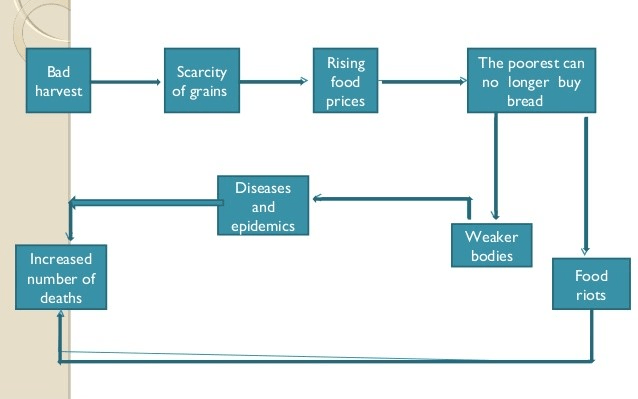 Subsistence Crisis
- Between 1689 and 1783 French fought several long and exhausting wars which proved to be disastrous both in terms of French Manpower and finances, not only led to mounting debts but interest on these debts also multiplied.
- To meet its mounting costs, the government increased taxes. The peasantry was the hardest hit who owned the minimum land and paid the maximum taxes.
- Taxes were Taille the direct land tax, a salt tax known as Gabelle, feudal dues or payments were taken by nobility and taxes known as Tithe was taken by the Church.
4. Growing Middle Class Envisages an End to Privileges
- The French Revolution drew its strength from the ideas of philosophers and thinkers of the time, groups of intellectuals classified by scholars according to their thinking,
- Physiocrats, Philosophers, and some others were grouped as liberals depending on their ideologies.
- Greatest thinkers were Francois Marie, Arouet de Voltaire, Jean Jacques Rousseau, Charles Louis Montesquieu, John Locke and Diderot to name a few.
- Through their teachings and writings, they stirred the people to action, revolutionized the minds of the people and prepared them for the great changes ahead.
5. Contribution of the Thinkers
(a) Charles Montesquieu
- A nobleman by birth, he becomes a lawyer and a judge.
- He preferred constitutional monarchy in France, he popularized the theory of powers within the government between the legislative, the executive and the judiciary in his book “The Spirit of the Laws”.
(b) Francis Aronet Voltaire
- He was another outstanding philosopher of the revolution.
- He wanted the people to think about their material life on earth and forget about heaven.
- He condemned the Church, which supported the ignored the poor.
(c) Jean Jacques Rousseau
- He is regarded as the architect of the French Revolution In the famous book “The Social Contract”, he proved that the government was the result of a social contract between the people on the one hand and the ruler on the other.
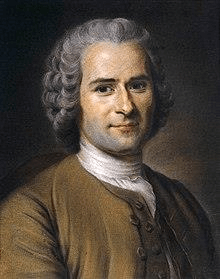
Jean Jacques Rousseau
- So if the ruler didn’t fulfil the contract, the people had the right to withdraw their loyalty to him and bring down the tyranny of the ruler by revolting against him.
(d) John Locke
- He was a great political thinker.
- He wrote "Two Treatises of Government" in which he sought to refute the doctrine of the divine and absolute right of monarch.
The Outbreak of the Revolution
- On 5 May 1789, Louis XVI called together an assembly to the Estate General to pass proposals for new taxes.
- The Estate General was a political body.
- The three estates sent their representatives to his body.
- Each of the three estates had one vote each. The first estate and the second estate had sent 300 representatives each.
- They were seated in rows facing each other on two sides. The third estate had sent 600 representatives. They required standing at the back.
- Peasants, artisans, and women were denied entry to the assembly. New taxes could be proposed only after the Estate General gave its approval to the king’s proposal.
- Since the first estate and the second estate were exempted from paying taxes, it was a foregone conclusion that the king’s proposals on new taxes would get the approval of the Estate General.
(a) The Tennis Court Oath
- Voting in the Estate General in the past had been conducted according to the principle that each estate had one vote.
- Members of the Third Estate demanded that voting now be conducted by the assembly as a whole, where each member would have one vote.
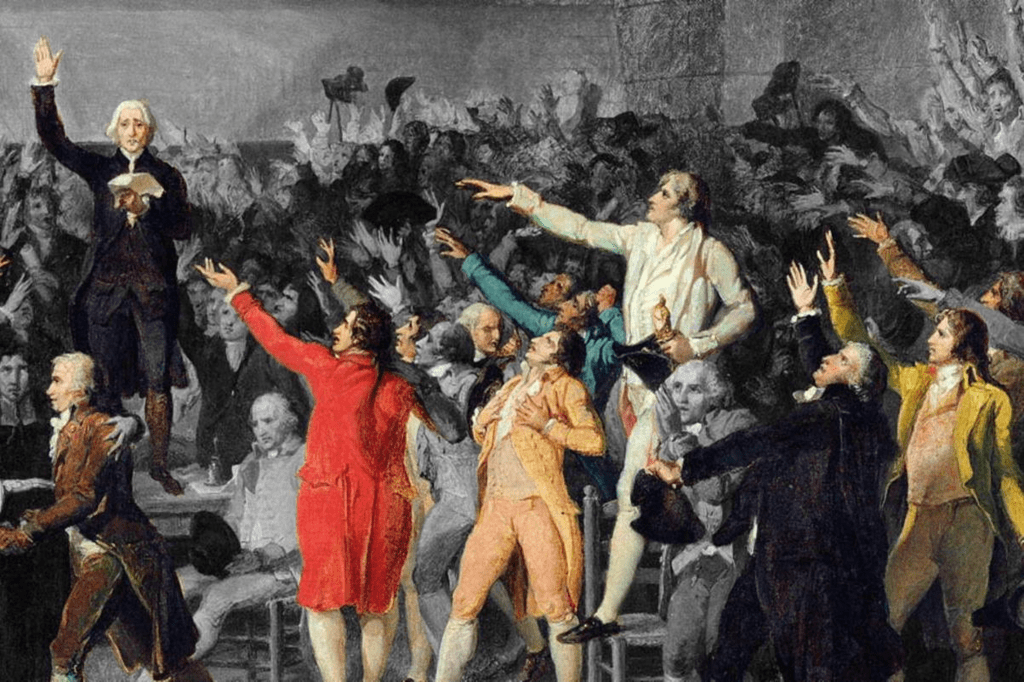 The Tennis Court Oath
- When the king rejected this proposal, members of the third Estate walked out of the assembly in protest.
- The representatives of the Estate on 20 June assembled in the hall of an indoor tennis court in the grounds of Versailles.
- They declared themselves a National Assembly and swore not to disperse till they had drafted a constitution of France that would limit the powers of the monarch.
- While the National assembly was busy at Versailles the rest of France seethed with turmoil, on 14 July the agitated crowd stormed and destroyed the Bastille.
(b) ‘Storming of the Bastille’
- On the morning of July 14, 1789, the city of Paris was in a state of alarm a severe winter had meant a bad harvest; the price of bread rose.
- Bakers exploited the situation and hoarded supplies. Crowds of angry women stormed into the shops.
- The army was ordered by the king to move into the city. It was rumored that the army would be ordered to open fire upon the citizens.
- Thousands of persons gathered and decided to form a people’s militia. They broke into a number of government buildings in search of arms. Bastille was a dreaded fortress-prison.
- It was hated by all because it stood for the despotic power of the king. Protesters stormed into the Bastille in search of arms.
- The commander of Bastille was killed; the prisoners were released. The fortress was demolished.
- Louis XVI finally accorded recognition to the National Assembly and accepted the principle that his powers would from now on be checked by a constitution.
- On the night of 4 August 1789, the Assembly passed a decree abolishing the feudal system of obligations and taxes.
(c) France Becomes a Constitutional Monarchy
- The National Assembly completed the drafting of the constitution in 1791.
- Power was now separated and assigned to different institutions-the legislature, executive, and judiciary making France a constitutional monarchy.
- The Constitution of 1791 vested the power to make laws in the National Assembly, which was indirectly elected.
- The Constitution began with a Declaration of the Rights of Man and Citizen. Rights such as the Right to life, freedom of speech, freedom of opinion, equality before the law were established as ‘natural and inalienable’ rights.
(d) The Declaration of Rights of Man and Citizen
- Men are born and remain free and equal in rights.
- The aim of every political association is the preservation of the natural and inalienable rights of man; these are liberty, property, security, and resistance to oppression.
- The source of all sovereignty resides in the nation; no group or individual may exercise authority that does not come from the people.
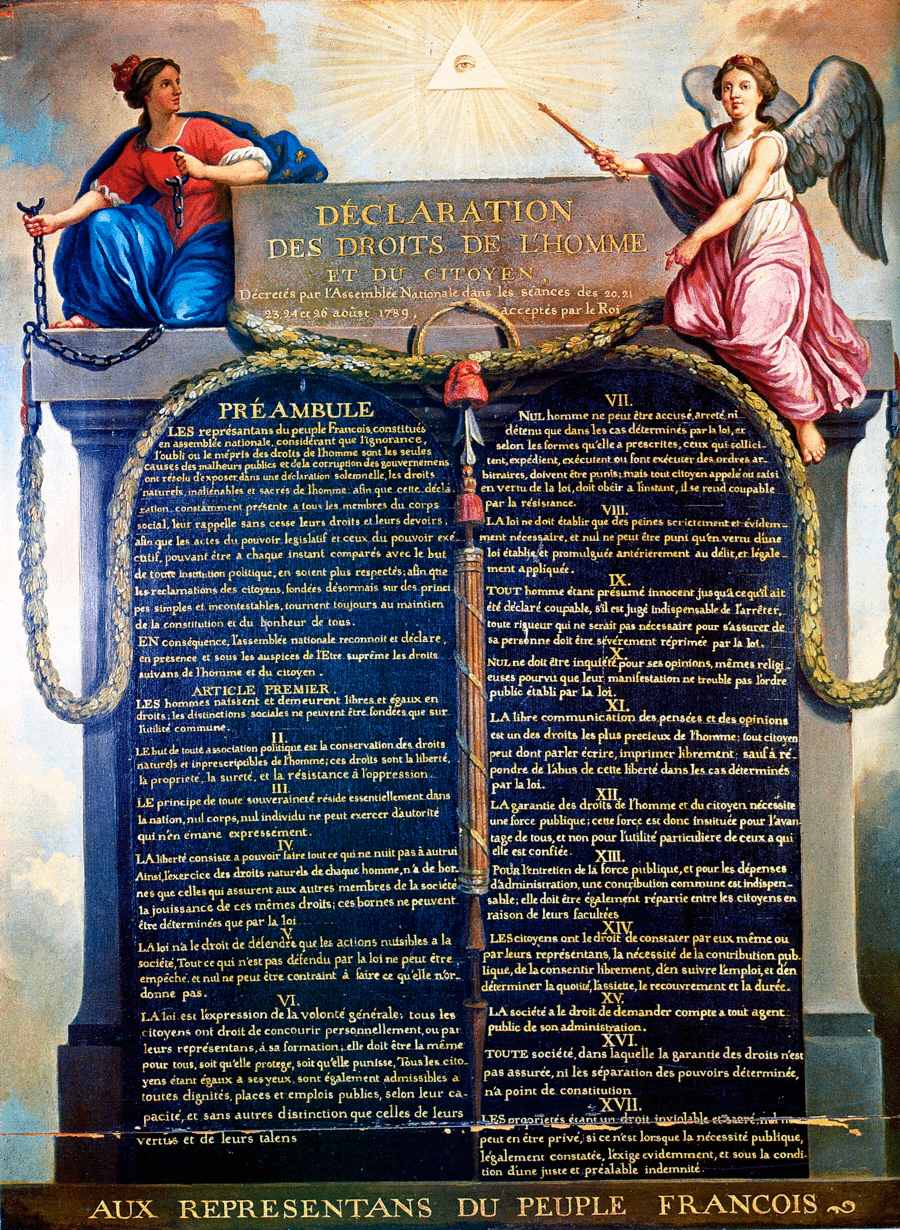 Declaration of rights of man and citizens.
- Liberty consists of the power to do whatever is not injurious to others.
- The law has the right to forbid only actions that are injurious to society.
- Law is the expression of the general will. All citizens have the right to participate in its formation, personally or through their representatives. All citizens are equal before it.
- No man be accused, arrested or detained, except in cases determined by the law.
- Every citizen may speak, write and print freely; he must take responsibility for the abuse of such liberty in cases determined by the law.
- For the maintenance of the public force and the expenses of administration, a common tax is indispensable; it must be assessed equally on all citizens in proportion to their means.
- Since the property is a sacred and inviolable right, no one may be deprived of it, unless a legally established public necessity requires it. In that case, just compensation must be given in advance Le-Barbier painted the declaration of the rights of man and citizens in 1790.
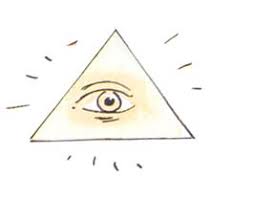
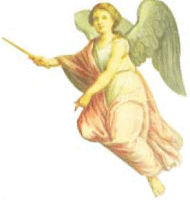
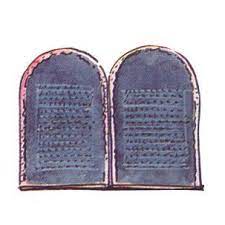
The majority of people at that time could not read and write, so he used many symbols to convey the content of the declaration of rights:
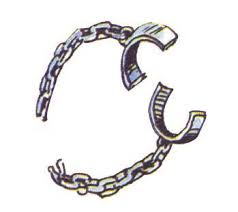
- The broken chain: Stands for the act of becoming free.
- The bundle of rods: It implies that strength lies in unity as one can be easily broken but not an entire bundle.

- The eye within a triangle radiating light: The eye stands for knowledge, the rays of the sun will drive away from the clouds of ignorance.
- Sceptre: It is a symbol of royal power.

- Snake biting its tail to form a ring, a symbol of eternity.

- Red cap: Cap is worn by a slave upon becoming free.

- Blue, White, Red: These are National colours of France.
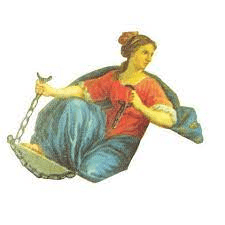
- Winged woman: Personification of the law.
- The law tablet: The law is the same for all.
France Abolishes Monarchy and Becomes a Republic
- Although Louis XVI had signed the Constitution, he entered into secret negotiations with the King of Prussia.
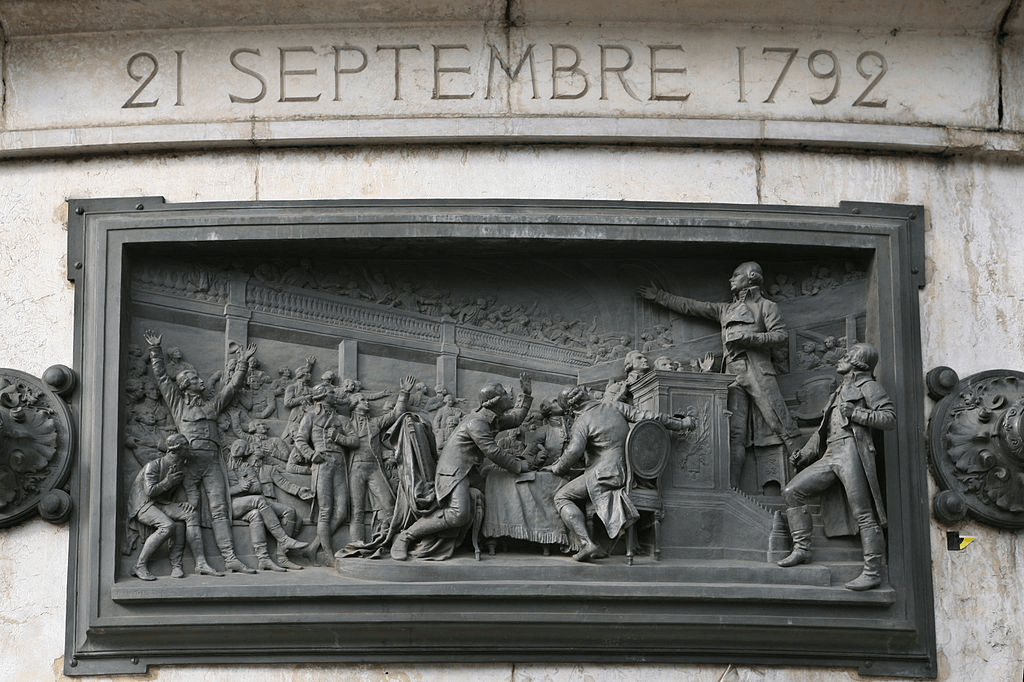 Proclamation of the abolition of the monarchy
- The National Assembly voted in April 1792 to declare war against Prussia and Austria. People saw this as a war of the people against kings and aristocracies all over Europe.
- The revolutionary wars brought losses and economic difficulties to the people.
- Political clubs became an important rallying point for people who wished to discuss government policies and plan their own form of action.
- The most successful of these clubs was that of the Jacobins, which got its name from the former convent of St. Jacob in Paris.
- In the summer of 1792, the Jacobins planned an insurrection of a large number of Parisians who were angered by the short supplies and high prices of food. On the morning of August 10, they stormed the Palace of the Toiletries and held the king himself as hostage for several hours.
- Elections were held. The newly elected assembly was called the Constitution. On 21 September 1792, it abolished the monarchy and declared France a Republic.
- Louis XVI was sentenced to death by a court on charges of treason. On 21 January 1793, he was executed publicly at the Place de la Concorde.
(a) The Reign of Terror
The period between 1793-94 is referred to as the “Reign of Terror”.
- During this period Robespierre followed a policy of severe control and punishment.
- Ex-nobles and clergy, even members of his own party who did not agree with his methods were arrested, imprisoned.
- France witnessed the guillotine of thousands of nobles and innocent men who supported.
- Robespierre issued laws placing a maximum ceiling on prices. Churches were shut down.
- Finally, Robespierre was guillotined in July 1794.
(b) A Directory Rules France
- The reign of terror ended in 1794. The Jacobin government fell, and a new constitution was prepared by an elected convention providing for a republican form a government with a legislature and an executive body called the Directory.
- The directory was an executive made up of five members. Directors often clashed with the legislative councils, who then sought to dismiss them.
- The political instability of the Directory paved the way for the rise of a military dictator, Napoleon Bonaparte.
Did Woman Have a Revolution?
- Most women of the third estate had to work for a living, did not have access to education or job training. Working women had to for their families; their wages were lower than those of men.
- In order to discuss and voice their interests, women started their own political clubs and newspapers. About sixty women’s clubs came up in different French cities. One of their main demands was that women enjoy the same political rights as men.
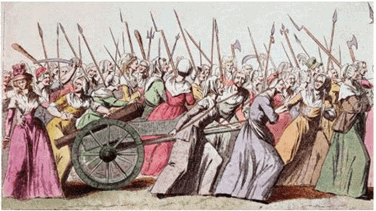
Women's Club during French Revolution
- In the early the revolutionary government did introduce laws that helped to improve the lives of women, creation of state schools, schooling made compulsory for all girls, could be no longer forced to get into marriage against their will, Divorce could be applied for by both women and men. Women could now train for jobs, could become artists or run small businesses.
- During the Region of Terror, the new government-issued laws ordering the closure of women’s clubs and banning their political activities.
- The fight for the vote was carried out through an International suffrage movement during the late nineteenth and early twentieth centuries. It was finally in 1946 that women in France won the right to vote.
The Abolition of Slavery
- Slavery was rampant in the European colonies of the Caribbean and the Americans. The slaves were mostly used on sugar, coffee, indigo, and tobacco plantation. Their demand was because of their availability and low costs.
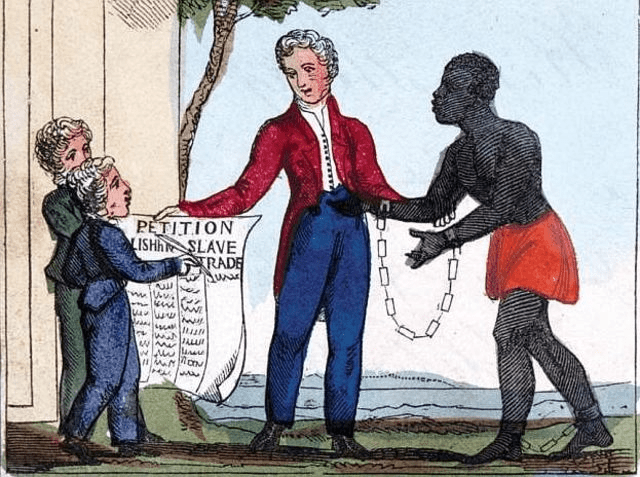
- In a debate in the Constituent Assembly in October 1790, to safeguard the commercial interests of ‘planters’ two parties holding opposite views emerged. The group that safeguarded planters’ interests but pledged to maintain order in the colonies came up around the Mosaic Club founded in August 1789 and their adversaries were the Society of the Friends of the Blacks founded in 1783.
The outcome of the debate was that I served the purpose of drawing attention to the condition of slaves and sowed seeds of future political divisions. - On February 4, 1794, the Convention (National Assembly) ended slavery in the France Colonies. Napoleon Bonaparte revoked the decree in 1802, slavery was finally abolished from the France Colonies in 1848.
The Revolution and Everyday Life
- France during 1789 saw changes in the lives of men, women, and children. Abolition of censorship happened in the summer of 1789.
- Declaration of the Rights of Man and Citizen proclaimed freedom of speech and expression to be a natural right.
- Freedom of the press meant opposing views of events could be expressed. Plays, songs, and festive processions attracted large numbers of people.
Effects of French Revolution
- The France Revolution produced great effects not only in France but also on the whole of Europe.
(a) Effect on France
- The France Revolution put an end to the arbitrary rule in France and paved the way for the establishment of a republic there.
- The special privileges of the high order were abolished and led to the regeneration of France on the basis of social equality.
- The declaration of the right of a man granted freedom and individual liberty to all without any distraction of class or creed. Many reforms were introduced in the administration.
- The higher and important posts in the state were opened to talented people. All were granted religious freedom.
- The Napoleonic code introduced a uniform system of weights and measures provided by the decimal system for France and made it quite clear and simple.
- He protected private property.
(b) Effects on Europe
- Equality: The France Revolution had a great influence on Europe. Equality was one of the main principles of the French Revolution. it implied the equality of all before law and abolition of privileges enjoyed by the upper order in the society. it established social, economic, and political equality in the European countries.
- Liberty: Revolutionary idea of liberty was hailed all over Europe. it implied social, political, and religious freedom. the declaration of rights made people understand the importance of personal liberty and rights.
- Sovereignty: The France revolution emphasized the fact that sovereignty recites in the general public and law should be based on the will of the people. It infused the spirit of nationalism and patriotism in the people.
(c) Global Impact
- The French Revolution had a global impact which felt equality in India.
- The UN Charter of Human Rights also embodies the principles of the Revolution as laid down in the Declaration of Rights of Man and Citizens.
Conclusion: The Rise And Fall Of Napoleon
- In 1804, Napoleon Bonaparte declared himself Emperor of France.
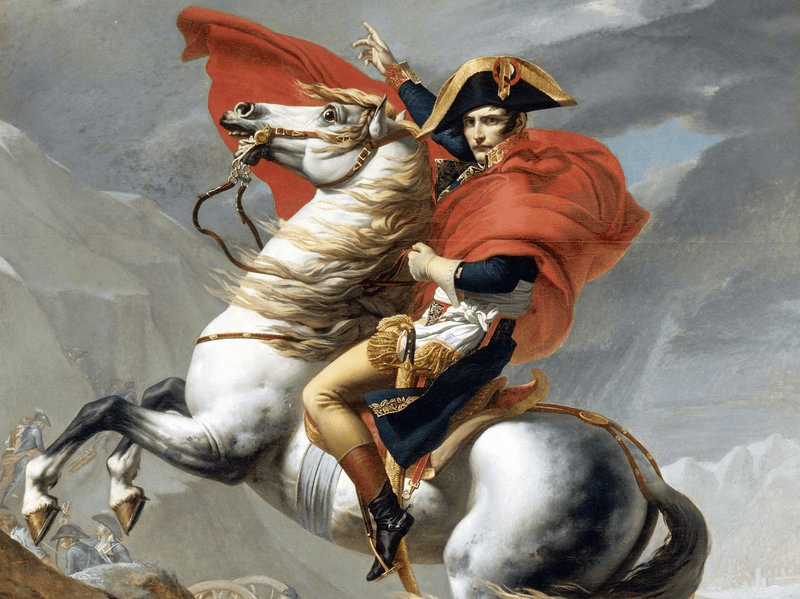
Napoleon Bonaparte
- He set out to conquer neighbouring European countries, dispossessing dynasties and creating kingdoms where he placed members of his family. Napoleon saw his role as a moderniser of Europe.
- He introduced many laws such as the protection of private property and a uniform system of weight and measures provided by the decimal system.
- Initially, many saw Napoleon as a liberation who would bring freedom for the people. But soon the Napoleonic armies came to be viewed everywhere as an invading force.
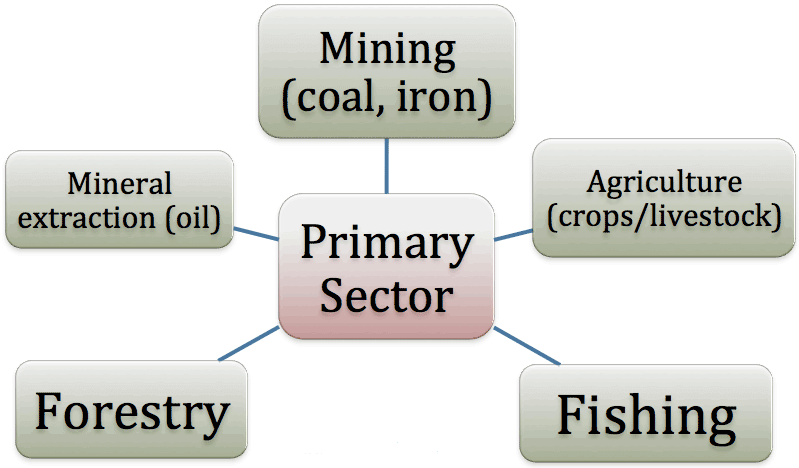 Primary Sector of Economy
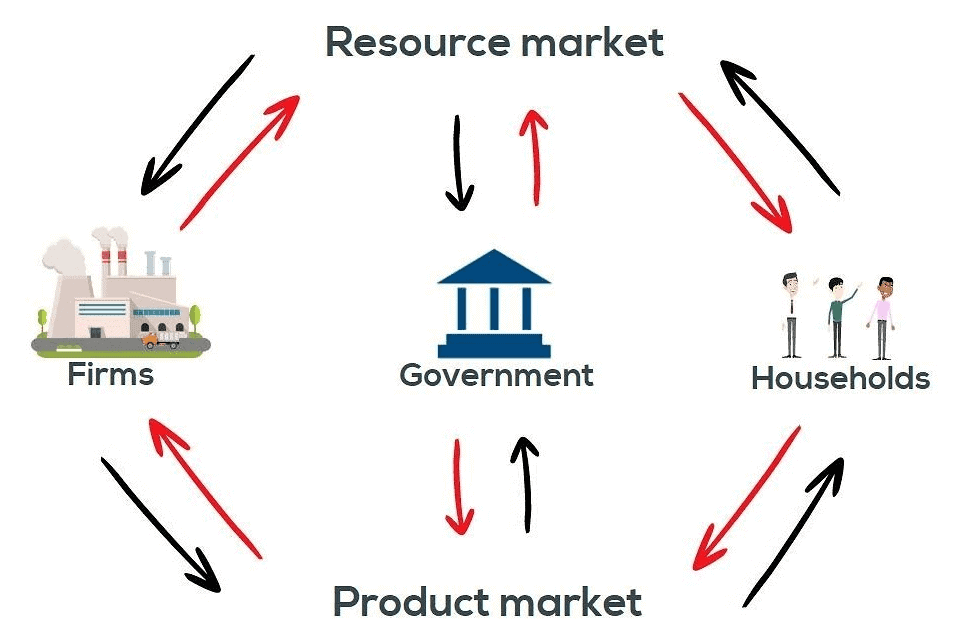 The Dependency of 3 Sectors on Each Other
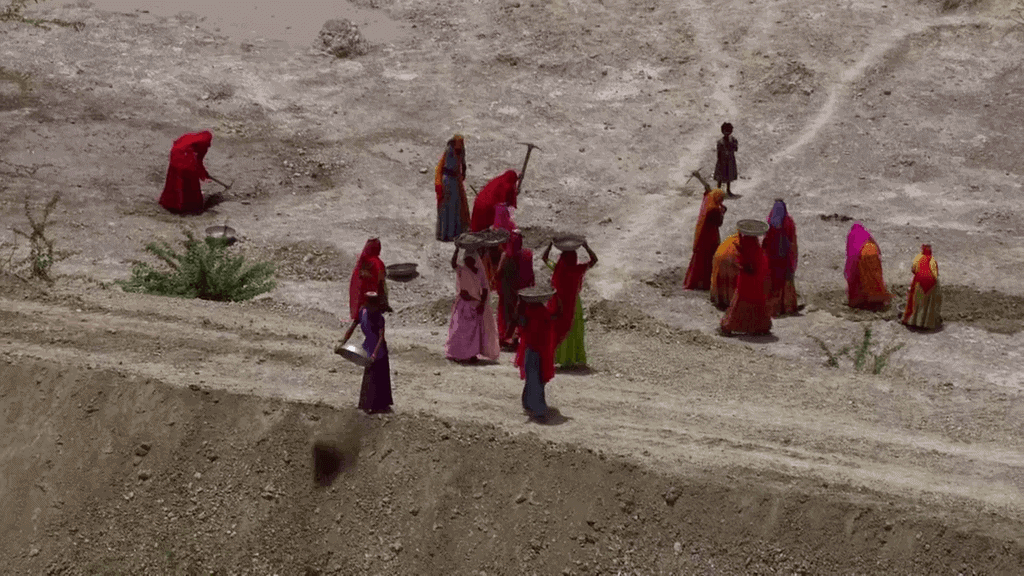 Women Employed under NREGA for De-silting a Tank
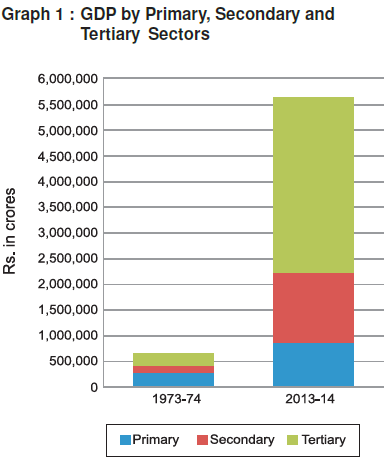 Try yourself:The task of measuring GDP is undertaken by theView Solution


